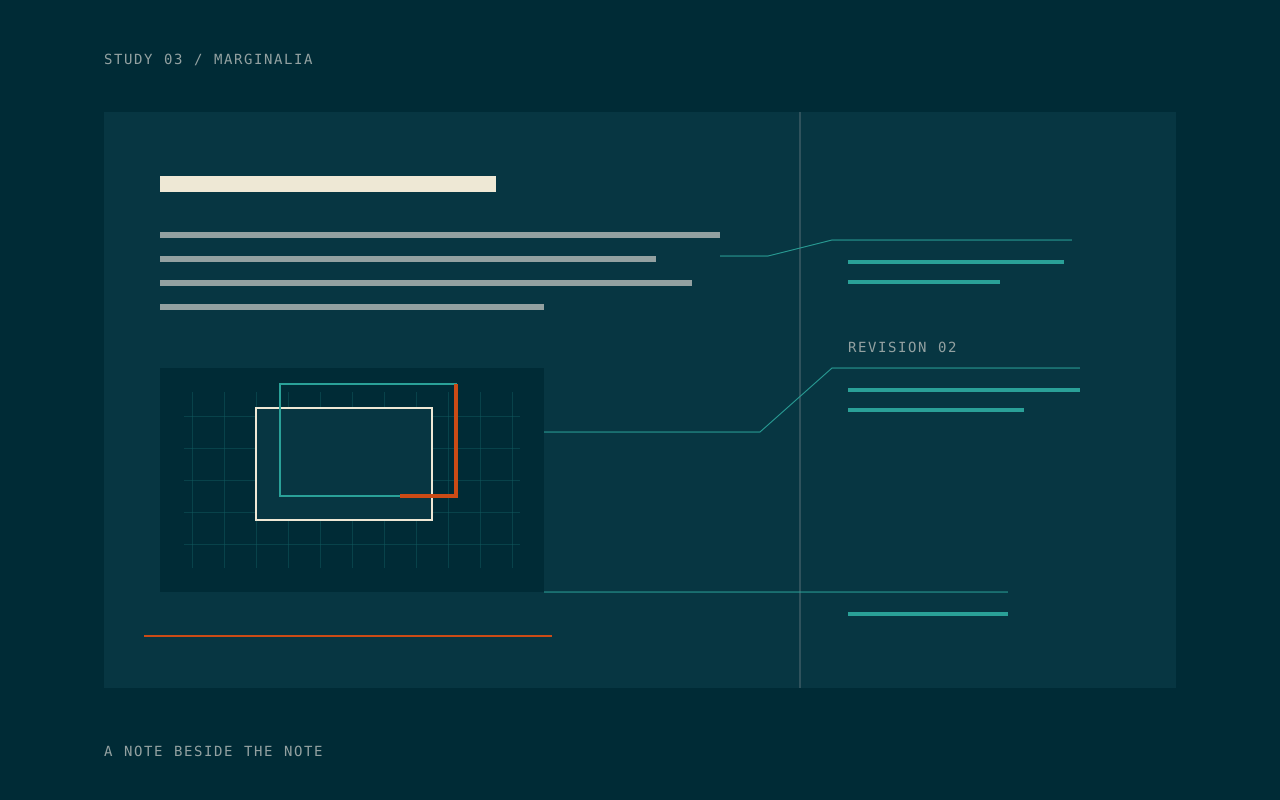


This demonstration notebook gives unfinished work a useful shape. A page can hold the current image, a short account of what changed, and a margin for the observation that refuses to become a conclusion.
A record of decisions
The most useful note is often a very small one: “the edge became too loud,” or “leave the lower corner empty.” It carries the reason for a decision while the reason is still fresh.
A notebook also holds versions that did not work. Their value comes from the annotation beside them. Without it, a discarded sketch is only another image. With it, the sketch becomes a reminder of what to look for next time.
A simple page grammar
Each entry begins with a date and a plain sentence. Images have captions that say what changed. Larger questions remain in the body, while small observations sit alongside it. The structure should be easy to repeat, including on days when there is very little to report.
The writing archive uses the same approach: a legible main thread, a little room around it, and no requirement that every thought arrive as a finished manifesto.