
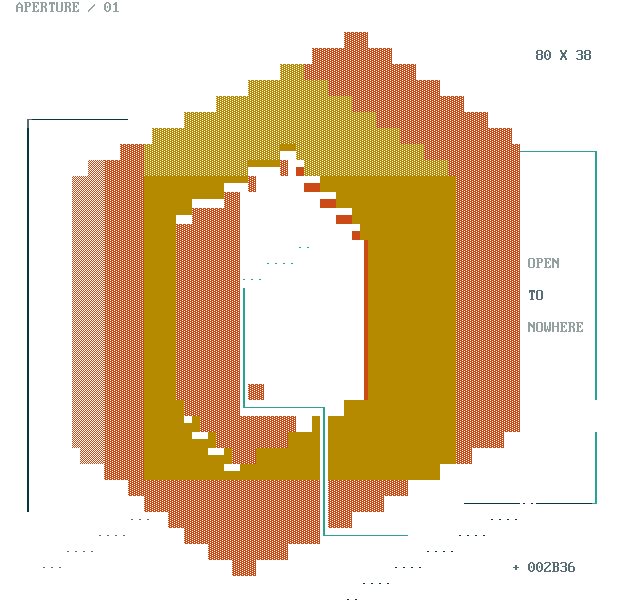
This is a demonstration project, made for this publication. It shows how a small visual investigation can hold its own page without pretending to be a client commission.
A room that does not quite close
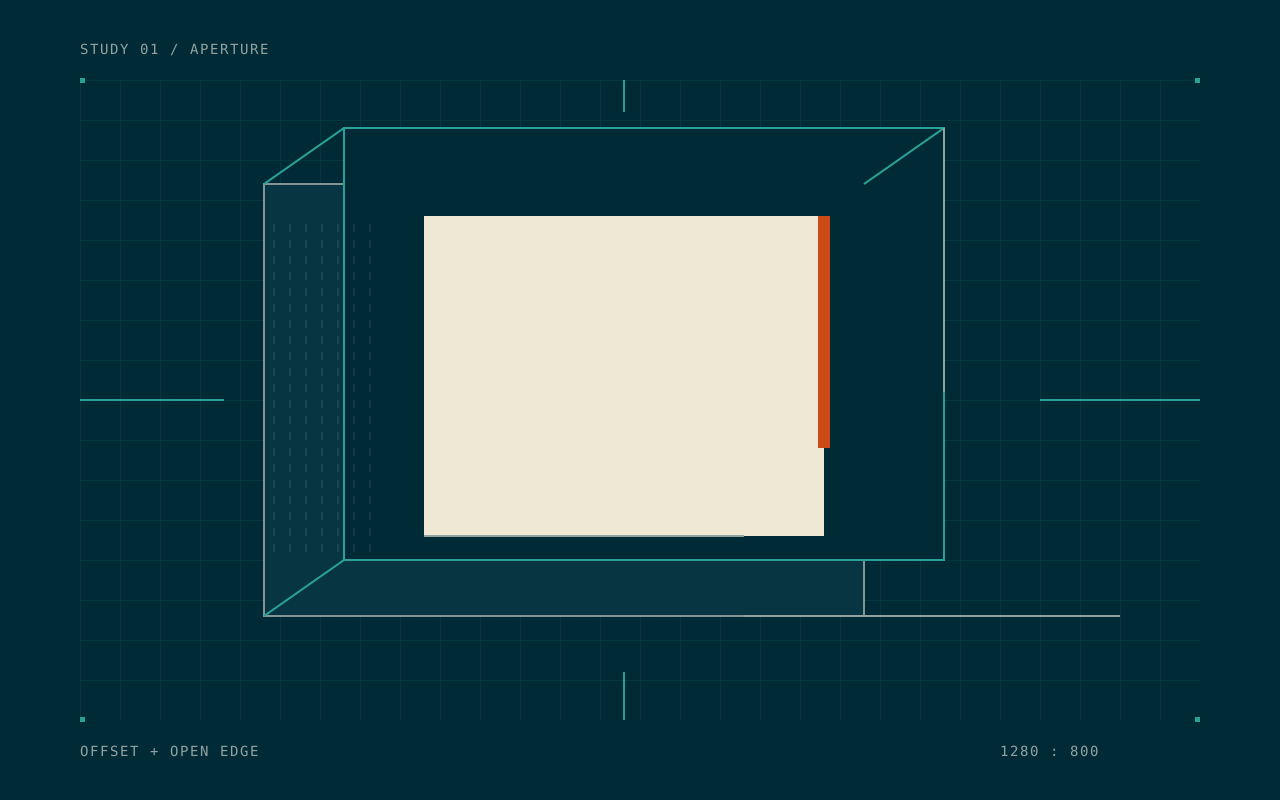
The starting point is an opening. Around it, the frames shift by a few cells. One reads as a wall, another as a shadow, and a third as something that might be on the other side. The drawing stays flat while suggesting a depth it cannot settle into.
Text mode makes that uncertainty useful. A half block can act as an edge or a plane. A line can be a boundary or a seam. The same character changes its job according to what touches it.
Working in cells
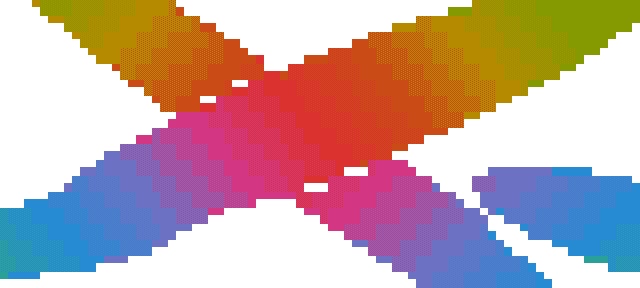
The large shape comes first. A sparse line structure establishes the room. Dense blocks hold one side of the composition while an open region lets the surrounding page enter the image. The smaller marks arrive last, as annotations to an already legible form.
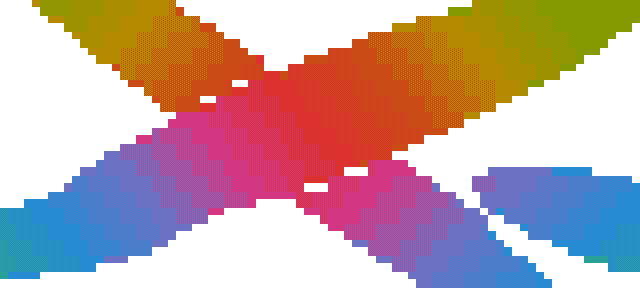
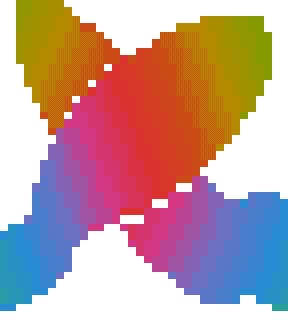
There are two related compositions: a wide plate and a narrow plate. The narrow version keeps the opening and changes the supporting architecture. It is a second drawing, with its own proportions.
What to carry forward
The useful part is the discipline of a limited vocabulary. A later study could change the palette, the density, or the shape of the opening and still begin with the same question: how little information can make a space feel inhabited?
The experiments gallery contains the actual text-mode pieces, their downloadable source files, and notes about the renderer.